
Showing posts with label Worth. Show all posts

Sunday, September 22, 2013

Costlier Heart Device May Not Be Worth It, Study Suggests

Dual-chamber implanted defibrillators had more complications than single-chamber modelsPreliminary research suggests procedure could

By Brenda Goodman

HealthDay Reporter

TUESDAY, May 14 (HealthDay News) -- Patients prone to dangerously fast heart rhythms may get just as much help and have fewer complications with less-expensive implanted defibrillators that run one wire to the heart instead of two, a new study shows.

Implantable cardioverter defibrillators, or ICDs, are like having an emergency "crash cart" in the chest. The devices can sense runaway heart rhythms and deliver powerful shocks to jolt the heart back to a normal, steady pace.

Studies have shown that the devices cut deaths in patients at risk for sudden cardiac arrest because their heart muscles are too weak to effectively pump blood throughout the body, a condition called cardiomyopathy.

But little evidence exists to help doctors decide when it's better to choose a single-chambered ICD for patients or the more complex dual-chambered model.

The study, published in the May 15 issue of the Journal of the American Medical Association, compared the fates of more than 32,000 Medicare patients who received ICDs, from 2006 through 2009. None of the patients also needed a pacemaker, a device that speeds up a slow heartbeat.

"There is evidence for greater risk of complications. Not clear evidence of benefit. That risk-benefit ratio really doesn't support the routine use of dual-chamber devices for primary prevention," said study co-author Dr. Pamela Peterson, an associate professor of medicine at the University of Colorado at Denver.

About one-third of patients received a single-chamber ICD, in which an electrical lead is attached to the heart's lower right pumping chamber. The other two-thirds got dual-chamber devices, in which wires are attached to the upper and lower chambers of the heart's right side.

After a year, patients who got single-chamber ICDs were no more likely to die or be hospitalized than patients who got the more expensive dual-chamber models. They were, however, slightly less likely to face serious complications, including fluid build-up around the heart or lungs and mechanical problems with the device that required a second surgery to fix.

That was true even after researchers adjusted their results to control for any differences between patients who got single- and dual-chamber devices.

Overall, close to 4 percent of patients with single-chamber ICDs had complications with their devices compared to about 5 percent of patients with dual-chamber models, the investigators found.

The study was observational, which means researchers couldn't prove that the type of ICD was the only reason patients fared the way they did. Though they tried to carefully control their data for important differences between the two groups, other factors they couldn't measure, such as medications people were taking, may have influenced the results.

The study was funded by a grant from the U.S. Agency for Healthcare Research and Quality.


View the original article here

Thursday, August 1, 2013

Are Pricey Computer-Aided Mammograms Worth It?

Sorry, I could not read the content fromt this page.

View the original article here

Tuesday, July 16, 2013

Tonsillectomy Might Be Worth It for Some Adults

Finnish study found fewer sore throats after surgery, less time lost from work or schoolFinnish study found fewer sore throats after

By Steven Reinberg

HealthDay Reporter

TUESDAY, April 2 (HealthDay News) -- Adults with recurrent sore throats might benefit from getting their tonsils removed, according to a new study from Finland.

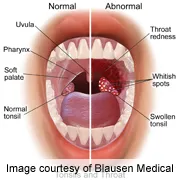
People tend to think of tonsillitis -- sore and swollen tissues at the back of the throat -- as occurring in childhood. However, many adults suffer from recurrent sore throats that result when tonsils are inflamed by bacteria living within.

These constant infections can lead to repeated courses of antibiotics and reduce a patient's quality of life, experts say.

"Adult patients who had disabling pharyngitis [severe sore throat] involving the palatine tonsils more than three times per year benefited from tonsillectomy," said lead study author Dr. Timo Koskenkorva, of the department of otorhinolaryngology at the Institute of Clinical Medicine at the University of Oulu.

"The rate of inflammation of the throat and number of symptomatic days were significantly lower in the tonsillectomy group than in the control group [study participants who did not have their tonsils removed], resulting in fewer medical visits and absences from school or work," he said.

However, inflammation and sore throats prevented by surgery would likely have been mild and caused by a virus rather than bacteria, Koskenkorva noted. And the surgery does carry some risk and a need for recovery time.

Dr. Linda Dahl, an ear, nose and throat specialist at Lenox Hill Hospital in New York City, said that adults who might consider a tonsillectomy are those who frequently get sick with sore throats. "No one ever regrets having their tonsils out," she said. "It has an impact on lifestyle."

In addition to not getting the infections, their body isn't fighting the bacteria living in the tonsils, which can make them feel rundown, said Dahl, who was not involved in the new study.

The report was published April 2 in the CMAJ (Canadian Medical Association Journal).

To test the benefits of having a tonsillectomy, Koskenkorva's team randomly assigned 86 patients to have the operation or not.

After five months, none of the patients who had a tonsillectomy had a severe sore throat, compared with 3 percent of those who didn't have the operation, the researchers found.

Of those who had a tonsillectomy, 4 percent saw a doctor for a sore throat compared with 43 percent who didn't have the procedure. In addition, 80 percent of patients who didn't have their tonsils out had an acute sore throat compared with 39 percent who had had tonsillectomies, the researchers noted.

"Tonsillectomy resulted in fewer symptoms of pharyngitis, consequently decreasing the number of medical visits and days absent from school or work. For this reason, surgery may benefit some patients," Koskenkorva said.

During the six-month follow-up period, people who had tonsillectomy had a lower overall rate of sore throats and significantly fewer days with throat pain, fever, cold or cough than participants who didn't undergo the procedure, the study found.


View the original article here

Tuesday, May 28, 2013

Costlier Heart Device May Not Be Worth It, Study Suggests

Dual-chamber implanted defibrillators had more complications than single-chamber modelsPreliminary research suggests procedure could

By Brenda Goodman

HealthDay Reporter

TUESDAY, May 14 (HealthDay News) -- Patients prone to dangerously fast heart rhythms may get just as much help and have fewer complications with less-expensive implanted defibrillators that run one wire to the heart instead of two, a new study shows.

Implantable cardioverter defibrillators, or ICDs, are like having an emergency "crash cart" in the chest. The devices can sense runaway heart rhythms and deliver powerful shocks to jolt the heart back to a normal, steady pace.

Studies have shown that the devices cut deaths in patients at risk for sudden cardiac arrest because their heart muscles are too weak to effectively pump blood throughout the body, a condition called cardiomyopathy.

But little evidence exists to help doctors decide when it's better to choose a single-chambered ICD for patients or the more complex dual-chambered model.

The study, published in the May 15 issue of the Journal of the American Medical Association, compared the fates of more than 32,000 Medicare patients who received ICDs, from 2006 through 2009. None of the patients also needed a pacemaker, a device that speeds up a slow heartbeat.

"There is evidence for greater risk of complications. Not clear evidence of benefit. That risk-benefit ratio really doesn't support the routine use of dual-chamber devices for primary prevention," said study co-author Dr. Pamela Peterson, an associate professor of medicine at the University of Colorado at Denver.

About one-third of patients received a single-chamber ICD, in which an electrical lead is attached to the heart's lower right pumping chamber. The other two-thirds got dual-chamber devices, in which wires are attached to the upper and lower chambers of the heart's right side.

After a year, patients who got single-chamber ICDs were no more likely to die or be hospitalized than patients who got the more expensive dual-chamber models. They were, however, slightly less likely to face serious complications, including fluid build-up around the heart or lungs and mechanical problems with the device that required a second surgery to fix.

That was true even after researchers adjusted their results to control for any differences between patients who got single- and dual-chamber devices.

Overall, close to 4 percent of patients with single-chamber ICDs had complications with their devices compared to about 5 percent of patients with dual-chamber models, the investigators found.

The study was observational, which means researchers couldn't prove that the type of ICD was the only reason patients fared the way they did. Though they tried to carefully control their data for important differences between the two groups, other factors they couldn't measure, such as medications people were taking, may have influenced the results.

The study was funded by a grant from the U.S. Agency for Healthcare Research and Quality.

View the original article here